How I Tamed My Investment Chaos Without Losing Sleep
Ever felt your portfolio was running wild while you just watched? I’ve been there—watching markets swing, making emotional calls, and second-guessing every move. It wasn’t until I focused on risk management that things clicked. This isn’t about chasing big wins; it’s about surviving the lows so you can enjoy the highs. Let me walk you through how building smarter habits transformed my investing game—no jargon, just real talk.
The Wake-Up Call: When My Portfolio Bit Back
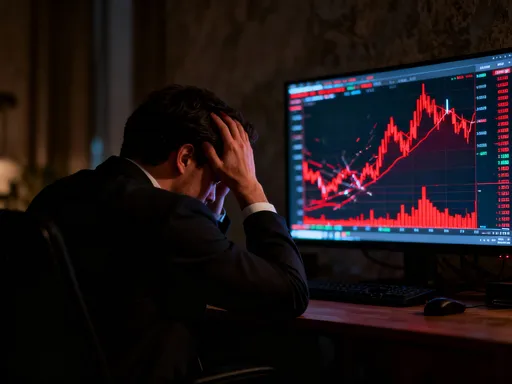
It started with a single investment that seemed bulletproof. I had poured a significant portion of my savings into a well-known consumer brand, one that had delivered steady growth for years. The company had strong earnings, loyal customers, and glowing analyst reports. What could go wrong? Within months, a sudden supply chain disruption, combined with shifting consumer trends, sent the stock into freefall. I watched helplessly as nearly 40% of that position evaporated in just six weeks. The worst part wasn’t the financial hit—it was the realization that I had no plan for this. I had celebrated gains without preparing for losses. I had treated diversification as a formality, not a necessity. That moment became my wake-up call: I wasn’t managing risk; I was ignoring it.
This experience exposed a flaw common among many long-term investors—overconfidence masked as strategy. I had mistaken past performance for future certainty. I had assumed that because a company was stable, it was safe. But safety in investing isn’t about the reputation of a stock; it’s about the structure of your decisions. I began to see that my portfolio wasn’t a collection of smart picks, but a fragile network of unchecked assumptions. The emotional toll was real. I found myself checking prices obsessively, losing sleep over minor dips, and making impulsive trades out of fear. I wasn’t in control. My money was controlling me. That’s when I committed to a new approach—one rooted not in chasing returns, but in protecting capital.
What changed wasn’t a single tactic, but a mindset. I shifted from asking, “How much can I make?” to “How much can I afford to lose?” This question reframed everything. It forced me to evaluate not just opportunities, but vulnerabilities. I started documenting my investments with a new lens: What could go wrong? What external factors might impact this asset? How much of my total portfolio does this represent? These weren’t exciting questions, but they were necessary. They grounded my decisions in reality rather than hope. And over time, that shift reduced my anxiety and increased my confidence—not because I was taking bigger risks, but because I was managing them deliberately.
Risk Isn’t the Enemy—It’s the Compass
For years, I viewed risk as the enemy of wealth. I thought the goal was to eliminate it entirely—by picking the “safest” stocks, avoiding volatility, or staying in cash. But that approach backfired. By trying to avoid all risk, I missed growth opportunities and struggled with inflation erosion. What I eventually learned is that risk isn’t something to eliminate; it’s something to understand and use. Like a compass, it points you toward smarter decisions when used correctly. The key is not to fear risk, but to measure it, categorize it, and respond to it with intention.
There are several types of risk that every investor must acknowledge. Market risk refers to broad downturns that affect entire sectors or economies. Concentration risk arises when too much of your portfolio is tied to a single asset, industry, or country. Liquidity risk means you might not be able to sell an investment quickly without taking a loss. And inflation risk—the silent eroder—means your money loses purchasing power over time, even if your account balance stays the same. Each of these plays a role in shaping your financial journey. The investor who ignores them is like a sailor who ignores the wind and waves, assuming calm waters will last forever.
Once I accepted that risk is unavoidable, I stopped resisting volatility and started planning for it. Instead of panicking when the market dipped, I asked whether my portfolio was built to withstand it. I began to see downturns not as disasters, but as stress tests—moments that reveal strengths and weaknesses. This mental shift didn’t make me immune to losses, but it made them manageable. I stopped chasing high-flying stocks just because they were rising, and I stopped selling in fear when prices fell. I developed a framework: every investment decision had to pass two tests—potential reward and acceptable downside. If I couldn’t define the worst-case scenario, I didn’t invest. This discipline didn’t make me richer overnight, but it made my journey far more stable and far less stressful.
Diversification Done Right (Not Just Throwing Darts)
Everyone says “diversify,” but few do it effectively. I used to think I was diversified because I owned ten different stocks. Then I realized they were all in the same sector—technology. When that sector corrected, my entire portfolio wobbled. True diversification isn’t about the number of holdings; it’s about the independence of those holdings. It means spreading your investments across different asset classes—stocks, bonds, real estate, and cash equivalents—so that when one area struggles, others can hold steady or even gain.
I rebuilt my portfolio with balance in mind. I allocated a portion to large-cap U.S. stocks for stability, added international equities for geographic exposure, included bonds to reduce volatility, and reserved a small allocation for real assets like REITs. This wasn’t a random mix; each piece had a role. The U.S. stocks provided growth potential, international stocks offered access to emerging markets, bonds acted as a shock absorber, and REITs gave inflation protection. I also paid attention to correlation—how different assets move in relation to each other. If everything goes up and down together, you’re not diversified. Real diversification means that when one asset falls, another may stay flat or rise, smoothing out your overall returns.
Another mistake I corrected was overestimating the safety of “blue-chip” stocks. Just because a company is well-known doesn’t mean it’s immune to disruption. I learned this the hard way with my consumer brand investment. Now, I look beyond brand recognition. I assess business models, debt levels, competitive advantages, and long-term trends. I also limit any single stock to no more than 5% of my total portfolio. This rule ensures that even if one investment fails completely, my overall financial health remains intact. Diversification isn’t about eliminating losses; it’s about ensuring no single loss can derail your long-term goals.
The Power of Position Sizing: Why Less Can Be More
One of my biggest mistakes was going all-in on what I believed was a “sure thing.” I had done research, read analyst reports, and felt confident. I allocated nearly 25% of my portfolio to a single stock, convinced it would double within a year. Instead, it dropped by more than half. The financial loss was painful, but the emotional impact was worse. I felt foolish, frustrated, and anxious about my ability to make sound decisions. That experience taught me a crucial lesson: no investment is ever a sure thing, no matter how strong the case seems. The real key to long-term success isn’t picking winners—it’s managing exposure so that losers don’t destroy you.
That’s when I discovered position sizing—the practice of limiting how much you invest in any single asset. I now follow a simple rule: no single stock or fund can exceed 5% of my total portfolio. For higher-risk investments, that limit drops to 2% or even 1%. This approach doesn’t prevent losses, but it contains them. If a stock drops 50%, a 5% position means I lose only 2.5% of my total portfolio. That’s a setback, not a catastrophe. It allows me to stay calm, reassess, and decide whether to hold, sell, or even buy more at a lower price.
Position sizing also changed how I evaluate opportunities. Instead of asking, “Could this go up 50%?” I ask, “What’s the worst it could do, and can I live with that?” This mindset keeps me focused on risk-adjusted returns—the return I get for the level of risk I’m taking. It’s not about maximizing gains; it’s about optimizing for sustainability. I’ve found that smaller, more balanced positions actually lead to better long-term results because I’m not forced to sell in panic during downturns. I sleep better knowing that no single decision can ruin my financial plan.
Stop-Loss Rules That Actually Work (Without Overreacting)
Early on, I tried using stop-loss orders—automatic sell commands when a stock drops to a certain price—but I kept getting “stopped out” only to see the stock rebound shortly after. It felt like the market was playing tricks on me. I abandoned the idea, thinking it was flawed. Later, I realized the problem wasn’t stop-losses; it was how I was using them. I had set arbitrary levels—like a 10% drop—without considering the stock’s volatility or my overall strategy. I was reacting to noise, not signals.
I revised my approach. Now, I use stop-loss rules that are tailored to each investment. For stable, dividend-paying stocks, I set wider buffers—sometimes 15% to 20%—because I expect less volatility. For more speculative or high-growth stocks, I use tighter stops, around 8% to 10%, because they can fall quickly. The key is consistency and alignment with my risk tolerance. I also avoid setting stops at round numbers (like $50 or $100), where many traders place orders, to reduce the chance of being triggered by short-term manipulation.
More importantly, I treat stop-losses as part of a broader risk plan, not a standalone tool. Before buying any stock, I define my entry price, target return, and maximum loss. This forces me to think ahead, not react in the moment. When a stop-loss triggers, I don’t immediately jump into something new. I pause, review what went wrong, and decide whether the original thesis still holds. Sometimes, I re-enter at a better price. Other times, I walk away. This process removes emotion from the equation and turns losses into learning opportunities. Stop-losses aren’t about being right all the time; they’re about protecting capital so you can stay in the game.
Stress-Testing Your Portfolio: Playing the “What If?” Game
I used to focus only on the best-case scenarios—what my portfolio could be worth if everything went well. Then I started asking the opposite: What if everything goes wrong? What if interest rates spike? What if a global crisis hits? What if a sector I’m heavily exposed to collapses? These aren’t meant to scare me, but to prepare me. I call this “stress-testing” my portfolio, and it’s become one of my most valuable habits.
I run simple simulations. For example, I ask: What if the stock market drops 30% tomorrow? How would my portfolio respond? Which assets would fall the most? Do I have enough liquidity to cover emergencies without selling low? I also test specific risks—like rising inflation or a recession—and assess how different parts of my portfolio would perform. I don’t need complex software; a spreadsheet and honest assumptions are enough. This exercise reveals hidden vulnerabilities. I once discovered that nearly 40% of my holdings were sensitive to interest rate changes. That was a red flag. I adjusted by adding more inflation-protected securities and reducing exposure to rate-sensitive bonds.
Stress-testing also helps me stay calm during real crises. When markets dip, I don’t panic because I’ve already imagined worse. I’ve seen how my portfolio would behave, and I know I can withstand it. This doesn’t mean I’m immune to market swings, but I’m no longer ruled by them. I’ve also shared this practice with my family, so they understand our financial plan isn’t based on optimism alone—it’s built on resilience. Knowing we’ve prepared for tough times gives us peace of mind, even when headlines are grim.
Building a Risk Routine: Making It Stick Without the Stress
Knowledge is useless without action. I learned that the hard way. I could read all the books and understand all the concepts, but if I didn’t apply them consistently, nothing would change. So I built a risk management routine—simple, regular habits that keep me on track without adding stress. Every quarter, I conduct a portfolio review. I check my asset allocation, reassess my position sizes, and verify that my stop-loss levels are still appropriate. I also update my stress-test scenarios based on current economic conditions.
I keep a risk journal—a notebook where I record every investment decision, the rationale behind it, and what I learned afterward. When I make a mistake, I write it down. When a stop-loss triggers, I note whether it was justified. This practice has improved my self-awareness and reduced repeat errors. I also schedule an annual “financial health day,” where I review my emergency fund, insurance coverage, and long-term goals. This holistic view ensures that my investing strategy supports my life, not the other way around.
The most important part of this routine is honesty. I ask myself hard questions: Am I taking too much risk because I’m chasing returns? Have I become complacent after a period of gains? Am I ignoring warning signs because I don’t want to admit a mistake? These questions aren’t easy, but they’re necessary. Over time, this discipline has become second nature. I no longer feel overwhelmed by market noise. I trust my process. And that trust has given me something priceless—peace of mind.
Lasting wealth isn’t built on lucky bets or perfect timing. It’s built on preparation, discipline, and the quiet confidence that comes from knowing you can weather any storm. I still experience market swings, unexpected news, and moments of doubt. But now, I face them with a plan. I’ve learned that the goal of investing isn’t to avoid risk, but to manage it wisely. By focusing on what I can control—position sizing, diversification, stop-loss rules, and regular reviews—I’ve turned chaos into clarity. My portfolio isn’t perfect, but it’s resilient. And that makes all the difference. If you’re feeling overwhelmed by your investments, remember: you don’t need to predict the future. You just need to prepare for it. Start small. Build habits. Protect your capital. And most of all, sleep well knowing you’re not gambling with your future—you’re guiding it.