How I Mastered the Rhythm of Investing Without Losing Sleep
What if financial freedom isn’t about picking the next hot stock, but about timing your moves like a seasoned conductor? I used to jump at every market buzz—only to get burned. Over time, I learned that smart investing isn’t just what you buy, but when and how you act. It’s about rhythm. This is how I built a system that balances returns, manages risk, and fits real life—no hype, just practical steps that actually work.
The Myth of the Perfect Investment
For years, the idea of the perfect investment consumed much of my attention. I believed that somewhere out there was a single stock, fund, or asset that, if discovered early, would deliver life-changing returns. I scoured financial news, followed market gurus, and even dabbled in cryptocurrency trends, always searching for that golden opportunity. Each time I thought I had found it, I poured in money, only to watch the asset falter or my emotions spiral. The reality I eventually faced was uncomfortable but clear: there is no such thing as a consistently perfect investment. Markets are too complex, economies too dynamic, and human behavior too unpredictable for any one asset to remain superior indefinitely.
What I failed to understand initially was that lasting wealth isn’t built through a series of brilliant guesses, but through a reliable process. The belief in a magic bullet leads to impulsive decisions—buying high out of excitement, selling low out of fear. These emotional swings erode returns over time, often more than poor investment performance itself. Research shows that the average investor underperforms the market not because of bad picks, but because of poor timing driven by emotion. The gap between fund returns and investor returns, known as the “behavior gap,” has historically been significant—sometimes exceeding several percentage points annually. This difference isn’t due to lack of intelligence; it’s due to lack of discipline.
Shifting my mindset from chasing performance to focusing on process was transformative. Instead of asking, “Which stock will double next year?” I began asking, “What system can help me grow wealth steadily over decades?” This subtle change redirected my energy from speculation to structure. I started to see investing not as a game of prediction, but as a practice of consistency. The goal was no longer to outsmart the market, but to stay in it—calmly, patiently, and with clear rules. By detaching my self-worth from individual outcomes and anchoring myself to a repeatable approach, I stopped reacting to noise and began building something durable.
Building a System, Not a Checklist
Once I recognized that isolated decisions wouldn’t lead to long-term success, I turned my attention to creating a true investment system. A checklist of tips—“buy low, sell high,” “diversify,” “avoid debt”—might sound helpful, but it lacks the structure needed to guide behavior when emotions run high. A real system, by contrast, operates like a set of automatic rules that function regardless of market conditions or personal mood. It removes guesswork and reduces the temptation to act impulsively. My system began with three foundational elements: clearly defined goals, an honest assessment of risk tolerance, and a realistic time horizon.
My goals weren’t abstract dreams like “be rich.” They were specific: save for a child’s education, build a retirement fund that would support a modest lifestyle, and maintain a cushion for unexpected expenses. Each goal had a timeline and a target amount. This clarity helped me determine how much risk I could afford to take. For example, money needed within five years belonged in stable, low-volatility accounts, while funds for retirement three decades away could tolerate more fluctuation. Risk tolerance wasn’t just about how much I thought I could handle emotionally—it was about how much loss my financial plan could absorb without derailing my objectives.
With these parameters in place, I established rules for entry, exit, and rebalancing. I set a policy to invest a fixed percentage of income monthly, regardless of market levels. I defined rebalancing triggers—such as when one asset class drifted more than 5% from its target allocation—and scheduled reviews every six months. These weren’t rigid commands, but guardrails that kept me on track. Automation played a key role: I arranged for contributions to go directly into my investment accounts, so the decision was made before I could second-guess it. Over time, this system became less about effort and more about routine. And that, I realized, was the point: consistency beats cleverness in the long run. The most sophisticated strategy fails if it isn’t followed; a simple one, faithfully executed, compounds into meaningful results.
The Hidden Power of Investment Rhythm
One of the most powerful shifts in my approach was embracing the concept of rhythm. Investing with rhythm doesn’t mean trying to time the market’s peaks and troughs—a futile and risky endeavor. Instead, it means aligning investment actions with predictable cycles: your income cycle, the market’s natural volatility, and your own emotional capacity. When I began spacing out my investments rather than making lump-sum bets, I noticed a change not only in my portfolio’s performance but in my peace of mind. The strategy I leaned into was dollar-cost averaging, where a fixed amount is invested at regular intervals, such as monthly or quarterly.
Dollar-cost averaging works because it removes the pressure to get the timing right. When prices are high, your fixed contribution buys fewer shares; when prices drop, the same amount buys more. Over time, this smooths out the average cost per share and reduces the risk of entering the market at a peak. It’s not a guarantee of profit, but it’s a proven method for reducing emotional stress and avoiding catastrophic timing errors. I combined this with seasonal rebalancing—adjusting my portfolio once or twice a year to bring allocations back in line with my targets. This rhythm created a cadence: invest steadily, review periodically, adjust as needed. There was no need to watch the market daily or react to headlines.
But rhythm extends beyond mechanics. It also involves syncing your financial behavior with your life. For instance, I timed my larger contributions to coincide with annual bonuses or tax refunds, turning windfalls into disciplined investments rather than impulsive spending. I also learned to recognize my emotional rhythms—periods when I felt overly confident or unusually anxious—and built in pauses before making any changes. This awareness helped me avoid decisions driven by mood. Over time, investing became less like gambling and more like tending a garden: regular care, patience, and trust in the process yielded better results than frantic intervention. The rhythm wasn’t about speed; it was about sustainability.
Earning Returns Without Chasing Them
In the early days, I equated high returns with success. I admired stories of investors who doubled their money in months and wondered why my portfolio grew so slowly. What I didn’t appreciate was that those dramatic gains often came with even greater risks—and that steady, consistent growth, though less exciting, was far more reliable. I began to shift my focus from chasing returns to preserving capital and allowing compounding to work. This change in perspective was quiet but profound. I stopped looking for home runs and started valuing consistent singles and doubles.
Compounding is most powerful when left undisturbed. A portfolio that earns 7% annually and reinvests gains will double approximately every ten years, even without additional contributions. But compounding only works if losses are controlled. A 50% loss requires a 100% gain just to break even—an asymmetry that few investors account for. I realized that avoiding large drawdowns was more important than capturing every market upswing. This led me to prioritize asset allocation—the strategic division of investments across different categories like stocks, bonds, and cash. A balanced allocation, tailored to my risk tolerance, helped smooth out volatility without sacrificing long-term growth potential.
I also paid closer attention to costs. Expense ratios on funds, trading fees, and tax inefficiencies can quietly erode returns over time. By choosing low-cost index funds and holding investments in tax-advantaged accounts where possible, I preserved more of my gains. Reinvestment efficiency mattered too: I set up automatic reinvestment of dividends and capital gains, ensuring that every dollar earned was put back to work immediately. These weren’t flashy moves, but they added up. The lesson was clear: real growth happens in the background, when you’re not watching the screen. It’s not about being the smartest investor in the room; it’s about being the most patient and disciplined.
Risk Control: The Silent Engine of Wealth
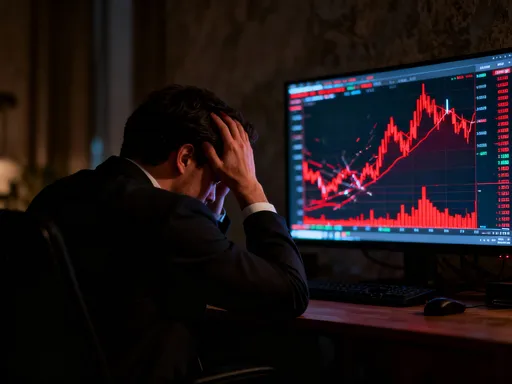
Risk management is rarely the most exciting topic, but it is the foundation of lasting financial success. I learned this the hard way during a market downturn when I watched a significant portion of my portfolio decline in a matter of weeks. At first, I panicked, wondering if I should sell to avoid further losses. But I remembered my system: I had set predefined rules for drawdown limits and diversification, and I stuck to them. Over time, the market recovered, and so did my portfolio. That experience taught me that risk control isn’t about avoiding losses entirely—it’s about managing them so they don’t derail your long-term plan.
I began treating risk as an active, ongoing process rather than a one-time decision. Diversification was my first line of defense. I spread my investments across asset classes, sectors, and geographic regions, reducing the impact of any single failure. But I also paid attention to correlation—ensuring that my holdings didn’t all move in the same direction at the same time. Position sizing was another key tool: I limited any single investment to a small percentage of my total portfolio, so no one decision could cause catastrophic damage. These rules weren’t meant to eliminate risk—they were designed to make it predictable and manageable.
I also built in buffers. A cash reserve, equivalent to six months of essential expenses, gave me the flexibility to weather emergencies without selling investments at a loss. I avoided leverage and margin trading, knowing that borrowed money amplifies both gains and losses. Most importantly, I accepted that volatility is normal. Markets go up and down; that’s their nature. My job wasn’t to predict those movements, but to stay the course. By turning risk management into a proactive habit, I transformed it from a source of anxiety into a source of confidence. It became the silent engine that allowed my wealth to grow steadily, even when I wasn’t paying attention.
Practical Moves for Real Life
No investment system works if it doesn’t fit your actual life. I tried several approaches before finding one that aligned with my income, responsibilities, and psychological comfort. Early attempts were too complex—too many accounts, too many decisions, too much monitoring. I burned out quickly. Simplicity became my guiding principle. I consolidated accounts where possible, reduced the number of holdings, and focused on strategies that required minimal ongoing effort. The goal was sustainability, not sophistication.
Automated investing became a cornerstone of my routine. I set up recurring transfers from my checking account to my investment accounts, timed to occur right after payday. This ensured that saving happened first, before spending. I also scheduled quarterly reviews—not daily check-ins—to assess performance and make adjustments if needed. These reviews were brief and structured, focusing on big-picture metrics like asset allocation and progress toward goals, rather than short-term fluctuations. This balance of automation and periodic oversight freed up mental energy and reduced decision fatigue.
Another practical move was establishing clear rules for windfalls. When I received a bonus, tax refund, or gift, I committed in advance to invest a portion—typically 50%—and use the rest for family needs or modest celebrations. This prevented impulsive spending while still allowing for enjoyment. I also communicated my approach to my family, so everyone understood the long-term vision. This wasn’t about deprivation; it was about intentionality. By designing a system that worked with my life, not against it, I made consistency achievable. The best financial strategy is the one you can actually follow.
Putting It All Together: The Path to Financial Calm
Financial freedom, I’ve come to realize, isn’t just about reaching a certain number in your bank account. It’s about reaching a state of calm—a sense of control, confidence, and clarity about your future. When I look back at my journey, the turning point wasn’t a single investment decision, but the decision to build a system and stick to it. By combining disciplined structure with a steady investment rhythm, I stopped reacting to markets and started progressing toward my goals. The noise didn’t disappear, but I learned to tune it out.
The principles I rely on today are simple but powerful: define your goals, create a repeatable system, invest with consistent rhythm, control risk proactively, and align your strategy with real life. These aren’t secrets or shortcuts—they’re practices grounded in financial reality and human behavior. They don’t promise overnight riches, but they do offer something more valuable: sustainable growth and peace of mind. Wealth isn’t built in a single moment; it’s built through repeated, thoughtful actions over time.
The journey isn’t about perfection. There will be market downturns, personal setbacks, and moments of doubt. What matters is showing up—on time, with discipline, and with a plan. Every contribution, every review, every decision made with intention moves you forward. And over time, those small, consistent steps add up to something remarkable. Financial calm isn’t the absence of risk or change; it’s the confidence that you can navigate both. That’s the rhythm I’ve mastered—not through genius, but through practice. And it’s a rhythm anyone can learn.