How I Stopped Guessing With My Money and Built a Smarter System for Picking Investments
What if your money could work harder without you chasing every trend? I used to jump from one investment to another—until I realized the real game wasn’t about picking winners, but building a system. It’s not magic: it’s structure. This is how I transformed my approach to fund management, made smarter product choices, and stopped losing sleep over market swings. Let me walk you through what actually works. Before I had a plan, my financial life felt like wandering through a crowded market—every stall shouting louder than the last, promising fast returns and easy wealth. I bought what looked shiny, followed tips from strangers online, and celebrated small wins without seeing the long-term cost. When volatility hit, I reacted emotionally, selling low and buying high, trapped in a cycle that eroded both my balance and my confidence. The turning point came not from a sudden windfall or market insight, but from a simple realization: successful investing isn’t about brilliance—it’s about consistency, clarity, and control. By replacing guesswork with a repeatable system, I turned confusion into calm, and risk into resilience. This is the journey from reaction to strategy, from noise to clarity, and from financial anxiety to steady progress.
The Mess I Was In: Why Random Investing Almost Broke Me
There was a time when I treated investing like a hobby rather than a disciplined practice. Every month, I would scan financial headlines, browse online forums, and search for the next big opportunity. If a stock was trending or a fund was delivering high returns, I felt compelled to act. My portfolio became a chaotic mix of exchange-traded funds, mutual funds, and individual stocks—some recommended by experts, others by friends, and a few simply because they sounded promising. I had no clear criteria for selection, no timeline for holding, and no exit strategy. The result was a tangled web of investments with no unifying purpose. I wasn’t building wealth—I was collecting financial clutter.
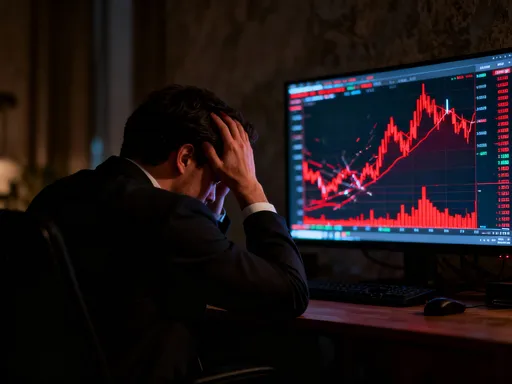
The real danger wasn’t just poor performance—it was the emotional toll. When markets dipped, I panicked. I remember one sharp correction when my portfolio dropped nearly 15% in a few weeks. Instead of staying the course, I sold several positions at a loss, convinced the downturn would continue. Of course, within months, the market recovered, and those same assets regained their value and more. But I wasn’t there to benefit. That single decision cost me thousands in lost gains and, more importantly, shook my belief in my own judgment. I began to see that my biggest risk wasn’t market volatility—it was my own behavior. Without a structured approach, I was vulnerable to fear, greed, and misinformation. Every decision felt urgent, and every outcome felt personal. I wasn’t managing money; I was reacting to noise.
Looking back, the problem wasn’t the financial products themselves. Many of the funds I chose had solid long-term track records. The issue was the absence of a guiding framework. I had no rules for entry or exit, no way to measure whether an investment truly belonged in my plan. I treated every opportunity as equally valid, failing to consider how it aligned with my goals, risk tolerance, or time horizon. This lack of structure turned what should have been a long-term wealth-building process into a high-stress guessing game. I was focused on short-term performance instead of long-term progress. The turning point came when I admitted that I needed a system—not another tip, not a new app, but a repeatable, rational process that could guide my decisions regardless of market conditions.
Why a System Beats Luck Every Time
Luck might deliver a winning trade or a timely tip, but it cannot sustain long-term financial success. What can is a well-designed investment system—a set of clear, consistent rules that govern how you select, manage, and adjust your investments. A system removes emotion from decision-making and replaces impulse with intention. It doesn’t promise to predict market movements or guarantee profits, but it does ensure that your actions align with your goals. Think of it like a recipe: you wouldn’t bake a cake by throwing random ingredients into a bowl and hoping for the best. Yet, that’s exactly how many people approach investing—trusting instinct over structure, hoping for good outcomes without a reliable process.
A solid system functions like a checklist for pilots. Before every flight, pilots go through a detailed series of steps to ensure safety and performance. They don’t skip items because they feel confident or because conditions seem favorable. The checklist is non-negotiable. In the same way, an investment system provides essential safeguards. It defines what types of products you will consider, under what conditions you will buy or sell, and how much risk you are willing to accept. These rules create discipline, reduce costly mistakes, and help you stay focused during periods of uncertainty. When the market drops, a system tells you whether to hold, rebalance, or adjust—rather than leaving you to react based on fear or hope.
Perhaps the most powerful shift a system brings is in perspective. Instead of asking, “What should I buy next?” you begin to ask, “What role should this investment play in my overall plan?” This subtle change transforms investing from a speculative game into a strategic allocation of resources. Each decision is evaluated not in isolation, but as part of a larger financial ecosystem. You stop chasing performance and start building resilience. Over time, consistency compounds—not just in returns, but in confidence. You no longer need to be right all the time; you just need to follow the process. And that, more than any single investment, is what leads to lasting financial progress.
Mapping Your Money: The First Step to Smart Allocation
Before I could build a better system, I had to understand what I wanted my money to do. I started by asking a simple question: What are my financial goals, and when will I need the funds? The answers led me to create a bucket strategy—a way to organize my money based on purpose and time horizon. I divided my investments into four main categories: growth, income, safety, and opportunity. Each bucket serves a distinct function, and each comes with its own set of rules for selection and management.
The growth bucket is designed for long-term appreciation, typically over ten years or more. This is where I allocate funds meant for retirement or major future expenses. Because time is on my side, I can afford to accept higher volatility in exchange for the potential of stronger returns. I fill this bucket primarily with low-cost index funds and broad-market ETFs that track major stock indices. These products offer diversification and historically strong performance over time. The income bucket supports shorter-term needs, such as generating cash flow in retirement or funding upcoming large purchases. Here, I use dividend-paying stocks, bond funds, and fixed-income securities that provide regular payouts. The safety bucket holds money I may need within the next one to three years. This includes emergency savings, planned expenses, and any funds I cannot afford to lose. I keep these in stable, liquid accounts like high-yield savings accounts or short-term money market funds. Finally, the opportunity bucket is a small portion—no more than 5%—allocated for higher-risk, higher-potential ideas. This might include individual stocks, sector-specific funds, or alternative investments. But even here, I apply strict limits and clear exit rules.
This framework transformed my decision-making. Instead of viewing every investment as a potential home run, I began to see them as tools for specific jobs. When I considered a new fund, I didn’t ask if it was “hot” or “trending.” I asked which bucket it belonged in and whether it fit the criteria for that category. This simple act of categorization reduced confusion and eliminated impulsive purchases. It also made rebalancing easier. If one bucket grew too large due to market gains, I could shift assets back into alignment without emotion. Mapping my money didn’t guarantee higher returns, but it did bring clarity, control, and peace of mind.
Product Selection: Matching Tools to Jobs
Once I had a clear structure, choosing financial products became far less overwhelming. I stopped searching for the “best” investment and started looking for the right fit. Just as you wouldn’t use a hammer to tighten a screw, you shouldn’t use a high-growth stock fund to save for a down payment on a house. Every financial product has strengths and limitations, and its value depends on how well it serves a specific purpose within your system.
I began evaluating each potential investment based on four key factors: cost, liquidity, risk, and alignment with my bucket strategy. Cost matters because fees erode returns over time. A fund with a 1% annual expense ratio may seem small, but over 20 years, it can reduce your total gains by tens of thousands of dollars. I now prioritize low-cost index funds and ETFs, which typically charge less than 0.20% per year. Liquidity is equally important—how quickly and easily can I access my money if needed? For my safety and income buckets, I require high liquidity, so I avoid locked-in products or those with early withdrawal penalties. Risk assessment involves understanding both volatility and potential loss. I review a fund’s historical performance, but not to predict the future—rather to see how it behaves in downturns. A product that drops 40% in a recession may be too aggressive for my risk tolerance, even if it delivers strong long-term returns.
Finally, alignment ensures that the product fits within my overall strategy. For example, if I’m considering a real estate investment trust (REIT), I ask whether it belongs in my income bucket due to its dividend payouts, or in my opportunity bucket due to its sector concentration. I also check whether it adds meaningful diversification or simply duplicates exposure I already have. This disciplined approach eliminated a lot of noise. I stopped chasing high-flying tech funds just because they were popular. Instead, I asked whether they served a purpose in my plan. Often, the answer was no. By treating product selection as a functional decision rather than an emotional one, I improved the quality of my choices and reduced unnecessary risk.
Risk Control: Building Guardrails, Not Bets
Even the best system can fail without proper safeguards. That’s why I built risk controls directly into my investment process. These aren’t predictions or market timing tools—they’re rules designed to protect me from my own impulses and from unexpected downturns. The first guardrail I implemented was automatic rebalancing. Every quarter, I review my portfolio to ensure each bucket remains within its target range. If the growth bucket has expanded beyond 60% of my total portfolio due to strong market performance, I sell a portion and shift the proceeds into underweight categories. This forces me to “sell high” and “buy low” systematically, without having to make emotional decisions in the moment.
I also set strict allocation limits. No single investment can exceed 10% of any bucket, and no bucket can exceed its predetermined percentage of the total portfolio. These caps prevent overconcentration and ensure that no single loss can derail my financial plan. For example, if a particular stock I own drops sharply, its impact is limited by the fact that it only represents a small portion of my opportunity bucket. Diversification, in this sense, isn’t just about owning different assets—it’s about creating structural resilience. I also use stop-loss guidelines for individual positions in my opportunity bucket. If a stock falls more than 15% below my purchase price, I reevaluate whether it still belongs. This isn’t about avoiding all losses—losses are inevitable in investing—but about preventing small mistakes from becoming large ones.
Another key control is maintaining a cash buffer. I keep enough in liquid, low-risk accounts to cover six months of essential expenses. This emergency fund ensures that I never have to sell investments at a loss to cover unexpected costs. It also gives me the freedom to stay invested during market corrections, knowing I have resources outside the portfolio to draw on if needed. These guardrails don’t eliminate risk—they manage it. They turn investing from a series of high-stakes bets into a steady, controlled process. Over time, I’ve learned that the goal isn’t to avoid all losses, but to ensure that no single event can threaten my long-term financial security.
Real Gains Come From Consistency, Not Genius
One of the most liberating realizations in my journey was that I didn’t need to be a financial genius to succeed. I didn’t need to predict interest rate changes, time the market, or uncover hidden investment gems. What I needed was consistency. The real power of my system lies not in dramatic moves, but in small, regular actions that compound over time. I set up automatic contributions to my investment accounts, ensuring that I invest the same amount each month regardless of market conditions. This practice, known as dollar-cost averaging, reduces the risk of buying at peak prices and builds discipline.
Reinvesting dividends and interest has also played a crucial role. Instead of taking payouts as cash, I let them automatically buy more shares. Over time, this reinvestment accelerates growth, especially in my growth and income buckets. I’ve seen how even modest returns, when compounded over decades, can lead to substantial wealth. More importantly, consistency has strengthened my confidence. I no longer second-guess every decision or obsess over daily market fluctuations. I trust the process. When volatility hits, I don’t panic—I check my system, follow my rules, and stay the course. This mental shift has been as valuable as any financial gain. I’ve stopped trying to outsmart the market and started focusing on outlasting it. The result? Steady progress, reduced stress, and a growing sense of control over my financial future.
Putting It All Together: My Daily Money Management Routine
Today, managing my money feels less like gambling and more like tending a garden. It requires regular attention, patience, and a willingness to let time do the work. I don’t check my portfolio daily or react to every news headline. Instead, I follow a structured routine. Every month, I review my automatic contributions and ensure they’re on track. Every quarter, I conduct a full portfolio review: I assess performance, rebalance across buckets, and confirm that each investment still serves its intended purpose. If a fund has changed its strategy or fees have increased, I replace it with a better option. But I don’t make changes simply because something new looks appealing.
Once a year, I revisit my overall financial goals. Life changes—children grow up, careers evolve, priorities shift—and my system must adapt. I reassess my time horizons, risk tolerance, and bucket allocations to ensure they still reflect my current reality. This annual checkup keeps my plan relevant and resilient. When it comes to new opportunities, I apply the same disciplined approach. I don’t jump in because something is popular. I ask whether it fits a specific need in my system. If it doesn’t, I walk away. This routine has removed the chaos and replaced it with calm. I no longer feel the pressure to be constantly active. I know that steady, thoughtful management yields better results than frantic trading.
The transformation wasn’t immediate, and it wasn’t flashy. But it was profound. My returns haven’t skyrocketed overnight, but my confidence has. I sleep better knowing that my decisions are guided by a clear, rational process. I’ve stopped losing money to emotional reactions and started building wealth through disciplined action. The tools I use—ETFs, mutual funds, savings accounts—are available to anyone. What makes the difference is the system that guides how I use them. It turns ordinary choices into powerful outcomes over time.
Building a system didn’t make investing easy—but it made it sustainable. The goal isn’t perfection; it’s progress with less stress. When your process is solid, product selection stops being overwhelming and starts making sense. You’re not betting on luck—you’re designing results. And that changes everything.